
Hip & Knee Replacement Rehab at Home
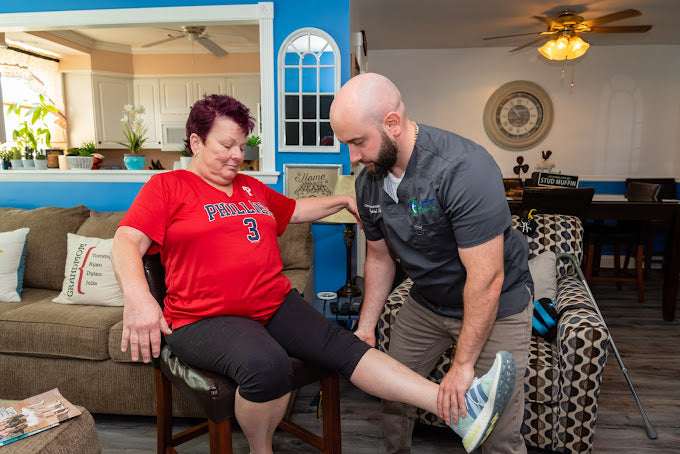
Physical therapy is one of the most important parts of recovering from a hip or knee replacement. We come to your home to help you move sooner, rebuild strength and get back to everyday life with your new joint.
How therapy helps your new joint
- Strengthens the muscles that support your new joint
- Improves circulation to promote healing
- Reduces pain and swelling
- Restores bending, straightening and normal walking
- Gets you back to daily activities faster
- Teaches safe movement to protect your joint long-term
What recovery looks like
- Early mobility. Gentle range-of-motion exercises and walking soon after surgery, following your surgeon's guidelines.
- Building strength. Stretching and strengthening as you heal. Walking time grows gradually, often from a few minutes a few times a day to 20 to 30 minutes.
- Back to normal life. Stairs, getting in and out of the car, and the activities you enjoy.
Knee replacement recovery
After a total or partial knee replacement, the biggest early goal is getting the knee to bend and straighten fully. Stiffness can set in quickly if the knee isn't moved, so regular exercise in the first weeks matters a lot. We also work on thigh strength, walking without a limp, and getting safely up and down stairs. For a closer look at common early exercises, read Exercises After Knee Replacement: What to Expect at Home.
Hip replacement recovery
After a hip replacement, therapy focuses on strengthening the hip and thigh muscles, improving balance and returning to a normal walking pattern. Depending on how your surgery was done, your surgeon may give you hip precautions, such as limits on how far you bend or cross your legs. We follow those instructions closely and teach you safe ways to get dressed, use the toilet, get in and out of bed and get into a car.
Why therapy at home right after surgery
- No car rides or waiting rooms while you're sore and tired
- We practice on your own stairs, bed and bathroom
- We spot trip hazards and suggest simple changes
- We check that your walker or cane fits and is used safely
- Family members can join and learn how to help
- Your exercise plan fits the space you actually have
When to call your surgeon
Contact your surgeon right away if you notice increasing redness, warmth or drainage at the incision, a fever, new calf pain or swelling, or pain that suddenly gets much worse. Call 911 for chest pain or sudden shortness of breath.
Frequently asked questions
When should physical therapy start after joint replacement?
Usually within the first days after you get home, following your surgeon's instructions. Starting early helps prevent stiffness and weakness.
How long does recovery take?
Every person is different. Many people make big gains in the first two to three months, and improvement in strength and comfort can continue for up to a year. Your therapist will track your progress and adjust your plan as you improve.
Can I do all my therapy at home instead of going to a clinic?
Yes. We provide outpatient physical therapy in your home for the whole course of your recovery, from the early weeks until you reach your goals.
Does Medicare cover in-home therapy after joint replacement?
Medicare Part B covers medically necessary outpatient physical therapy, which we provide in your home. We also accept Aetna Medicare, Independence Blue Cross and Keystone 65, and we check your coverage before your first visit.
Recovering from a different surgery? See our orthopedic surgery recovery page.
What our patients say
"Oleg has literally saved me from being in a paralyzed situation with my right TKR... Each week I gained flexion that I didn't have. I know that without him I would not have gotten to my full flexion." Katie King Whalen, Google review
A referral from your surgeon or doctor is needed for therapy after joint replacement, and we'll coordinate with them for you. Medicare Part B accepted.